
Content marketing is the practice of creating and sharing genuinely useful content blog posts, videos, guides, newsletters to attract an audience and grow a website organically, without relying purely on paid ads. It works because it flips the usual advertising relationship: instead of interrupting someone with a message, you give them something worth their time first, and trust follows naturally. Over time, that trust turns into repeat visitors, email subscribers, backlinks from other sites, and eventually customers all without paying for each individual click the way you would with ads.
The catch is that “just start blogging” isn’t a strategy on its own. A lot of sites publish consistently for months and see almost no growth, not because the writing is bad, but because there’s no underlying system behind it no clear audience, no distribution plan, no way to measure what’s actually working. Content marketing rewards patience, but it punishes randomness. This guide walks through the process step by step, from figuring out who you’re writing for to tracking whether your efforts are actually growing your site, so you can build a system rather than just a pile of posts.
What you’ll learn:
- Step 1: Know your reader
- Step 2: Plan a content calendar
- Step 3: Create valuable content
- Step 4: Distribute across channels
- Step 5: Measure and keep growing
- Common beginner mistakes
- FAQs
- Conclusion
Step 1: Know Your Reader

Content written for everyone tends to connect with no one. Before writing a single post, it helps to define a specific reader in detail not just a demographic, but a real person with a job, a problem, and a goal. For example: a 28-year-old marketing manager at a small D2C brand, managing a small team, under pressure to grow organic traffic, who has tried blogging before without consistent results.
That level of specificity changes what you write and how you write it. Instead of vague, broad posts trying to appeal to everyone remotely interested in your topic, you end up creating content that speaks directly to a real frustration which is what actually earns attention, shares, and return visits.
If you’re not sure who your reader is yet, look at who’s already engaging with your existing content, or who your competitors’ most popular posts seem to be written for. Real signals beat guesswork.
Step 2: Plan a Content Calendar

Consistency is one of the biggest differentiators between content marketing that compounds over time and content marketing that fizzles out after a few posts. A content calendar keeps you publishing on a predictable schedule instead of scrambling for a topic every time you sit down to write.
A simple calendar should map out:
- Topics — ideally organized into clusters around a handful of core themes, rather than scattered, unrelated posts
- Format — blog post, video, infographic, podcast episode, and so on
- Publish date — realistic enough that you’ll actually hit it
- Distribution plan — where each piece will be shared once it’s live
Organizing content into clusters — a handful of posts that all link back to one central, comprehensive “pillar” page also helps search engines understand how your content fits together, which can lift the ranking of the entire group rather than just one page at a time.
Step 3: Create Valuable Content

This is the step people usually start with, but it works far better once the first two steps are already in place. A few principles that separate content that performs from content that doesn’t:
- Solve a real, specific problem rather than covering a topic broadly and shallowly. Narrow and thorough beats broad and thin.
- Back it up with something original where you can your own data, a small survey, a real example, or firsthand experience. Original insight is what earns natural backlinks and shares, since it gives other people something new to reference.
- Mix formats deliberately, not just for variety’s sake, but based on what your specific audience actually consumes a busy professional audience might respond better to a concise newsletter than a 40-minute video.
- Avoid sounding purely promotional. Content that reads like an ad loses trust fast; it’s fine to mention your product where it’s genuinely relevant, but the content needs to be useful on its own first.
It’s also worth planning for AI-driven search from the start. Search results increasingly surface AI-generated summaries and direct answers at the top of the page, pulled from content that’s structured clearly with specific, factual answers rather than vague filler. Writing with clear headings, direct answers early in a section, and well-organized information isn’t just good for human readers it also makes your content easier for these systems to understand and cite, which is quickly becoming its own source of visibility.
Step 4: Distribute Across Channels
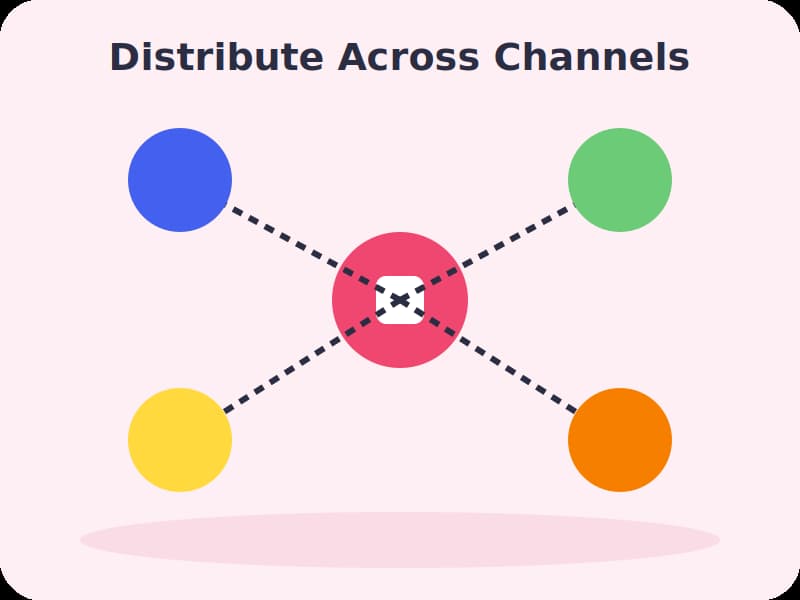
No matter how good a piece of content is, it won’t grow your site if nobody sees it. Every post needs a distribution plan, not just a publish button. Common channels worth considering:
| Channel | Why it helps |
| SEO / organic search | Compounds over time — a well-optimized post can keep attracting visitors months or years later |
| Email newsletter | Reaches people who already opted in, with no algorithm deciding who sees it |
| Social media | Good for driving initial traffic and starting conversations, though reach is often short-lived |
| Repurposed formats | One blog post can become a short video, a set of social clips, or an infographic — multiplying the return on the original effort |
| Communities & forums | Relevant, non-spammy participation in niche communities can drive highly qualified traffic |
Repurposing deserves special attention, since it’s one of the most efficient ways to stretch a single piece of research or writing. A detailed blog post can become a newsletter, several social posts, and a short video, all from the same core material.
Step 5: Measure and Keep Growing
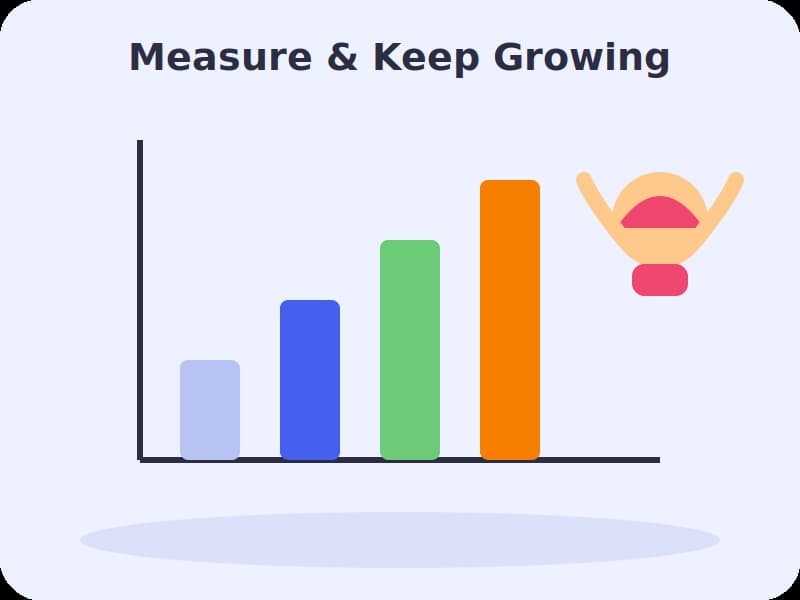
Content marketing is a long-term game, but that doesn’t mean you should fly blind. Track a small set of metrics regularly rather than obsessing over vanity numbers:
- Organic traffic — is search traffic to your content trending up over months, not days?
- Engagement — time on page, scroll depth, and comments tell you whether content is actually being read, not just clicked.
- Email signups — a strong sign that a piece of content earned enough trust for someone to want more.
- Conversions — whatever “success” means for your site, whether that’s a purchase, a lead form, or a download.
Use what you learn to double down on what’s working the topics, formats, and channels that are actually moving the numbers — and quietly retire the ones that aren’t, rather than spreading effort evenly across everything.
It’s worth checking in on a monthly rhythm rather than daily. Content marketing metrics, especially organic traffic, are naturally noisy week to week a single post going slightly viral or a minor search ranking fluctuation can make short-term numbers misleading. A monthly view smooths that out and gives you a much more honest picture of whether the overall system is working.
Watch: Full Video Walkthroughs
Common Beginner Mistakes to Avoid
- Writing for everyone. Broad, generic content rarely performs as well as content written for one clearly defined reader.
- Publishing without a distribution plan. Hitting publish and hoping people find it isn’t a strategy — every piece needs somewhere to go afterward.
- Chasing quantity over depth. A handful of thorough, genuinely useful posts tends to outperform a large volume of shallow ones.
- Ignoring older content. Posts that performed well can lose ranking and relevance over time if they’re never revisited and updated.
- Sounding overly promotional. Content that feels like a sales pitch loses the trust that makes content marketing work in the first place.
Frequently Asked Questions
Q: How long does content marketing take to show results?
A: It’s a long-term strategy — most sites see meaningful growth after several months of consistent publishing, not from a handful of posts.
Q: How often should I publish?
A: A sustainable, consistent schedule beats an aggressive one you can’t maintain. One well-researched, thorough post every week or two is a realistic starting cadence for most people.
Q: Do I need a huge budget to start?
A: No. Content marketing is one of the more affordable growth strategies — the main investment is time, research, and consistency rather than ad spend.
Q: Should I focus on one channel or many?
A: Start with one or two channels you can do well rather than spreading thin across five. A blog paired with an email newsletter is a solid, manageable starting combination for most beginners.
Q: What’s the difference between content marketing and just blogging?
A: Blogging is one format within content marketing. Content marketing is the broader strategy — defining an audience, planning topics, distributing across channels, and measuring results — that a blog fits inside.
Conclusion
Growing a blog or website through content marketing comes down to a repeatable loop: understand who you’re writing for, plan consistently instead of sporadically, create content that genuinely helps that reader, get it in front of people through more than one channel, and use real metrics to guide what you do next. None of this requires a big team or budget — it requires patience and a system you can actually stick to. Start with one clearly defined reader and one solid distribution channel, and let the results guide where you expand from there.