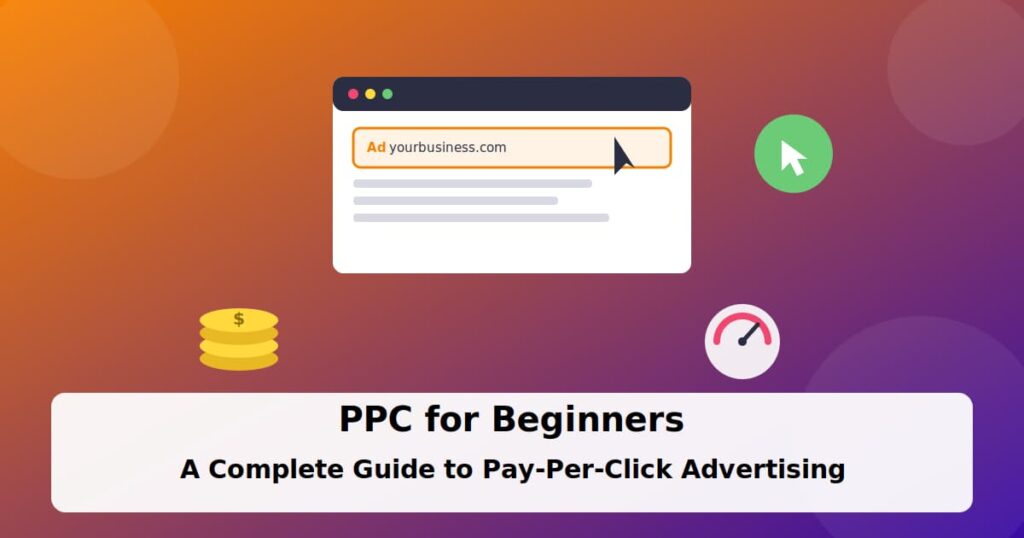

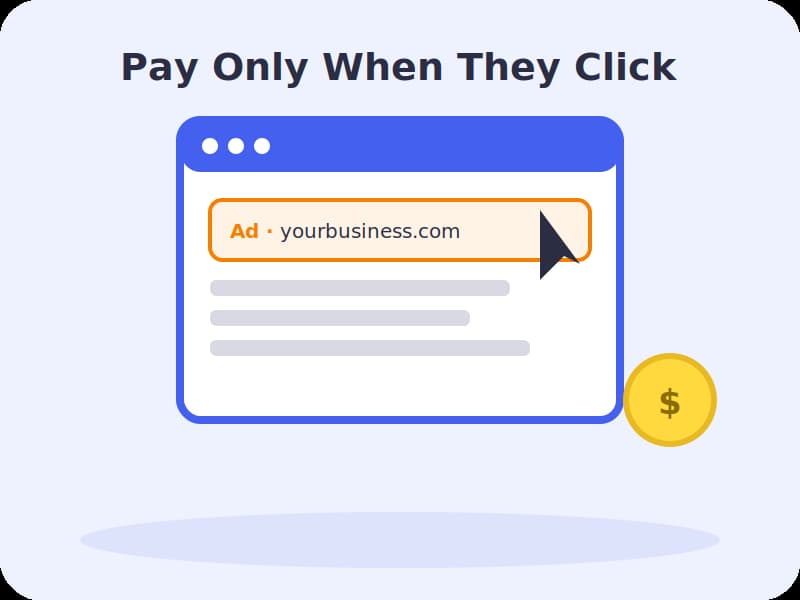
PPC, short for pay-per-click, is a form of online advertising where you only pay when someone actually clicks your ad not just for it being shown. Instead of buying ad space outright, you’re buying visits: to your website, your landing page, or your app. That single mechanic is what makes PPC one of the most measurable forms of advertising available, since every dollar spent maps directly to a real action someone took, not just an impression that may or may not have registered.
This is also what makes PPC feel different from traditional advertising the first time you try it: you set the budget, you choose exactly who sees your ads, and you can see the results clicks, costs, conversions updating in near real time. It’s why PPC has become the backbone of paid marketing across Google, Meta, Microsoft, LinkedIn, Amazon, and beyond, and why businesses of every size use it alongside slower-building strategies like SEO. This guide walks through exactly how PPC works and how to set up your first campaign, one step at a time, so you’re not just clicking buttons in an ad platform but understanding what each decision actually does to your results.
What you’ll learn:
- Step 1: Understand how PPC actually works
- Step 2: Choose your platform
- Step 3: Target the right people
- Step 4: Set your budget and bid
- Step 5: Launch and optimize
- Common beginner mistakes
- FAQs
- Conclusion
Step 1: Understand How PPC Actually Works
At its core, PPC is an auction. Advertisers bid on the chance to show their ad to a specific audience people searching a certain keyword, or people matching certain demographics and interests and the platform decides which ads get shown based on a mix of bid amount and ad quality. You only pay when someone clicks, which means impressions (people simply seeing the ad) are free.
A few core terms come up constantly in PPC, so it’s worth getting comfortable with them early:
| Term | What it means |
| CPC (Cost Per Click) | What you actually pay each time someone clicks your ad |
| CTR (Click-Through Rate) | The percentage of people who see your ad and click it |
| Quality Score / Relevance Score | A platform’s rating of how relevant your ad is to the audience — higher scores often mean lower costs |
| Conversion | The action you actually want — a sale, a lead, a signup — after the click |
| Cost Per Conversion | What you’re really paying to get one meaningful result, not just one click |
The average cost per click across industries sits around $2–3, but it varies enormously from roughly $1 on platforms like Microsoft and Meta to $8 or more in highly competitive sectors. Your industry, not just your skill, plays a big role in what you’ll pay.
Step 2: Choose Your Platform
PPC isn’t limited to one place it runs across search engines, social platforms, and marketplaces, and each suits a different kind of intent:
- Google Ads the largest and most established PPC platform, ideal for capturing people actively searching for what you offer
- Microsoft Advertising (Bing Ads) often overlooked, typically has lower competition and lower CPCs than Google for similar keywords
- Meta Ads Manager (Facebook & Instagram) better suited to demand generation and visual products, reaching people based on interests rather than active searches
- LinkedIn Campaign Manager strongest for B2B, professional services, and reaching people by job title or industry
- Amazon Advertising built specifically for sellers, showing ads to people already shopping with purchase intent
For most beginners with a website and a specific product or service to sell, Google Ads is the natural starting point, since it captures people who are already looking for a solution. If your product is more visual or benefits from discovery rather than a direct search, Meta may be a better first stop.
Step 3: Target the Right People
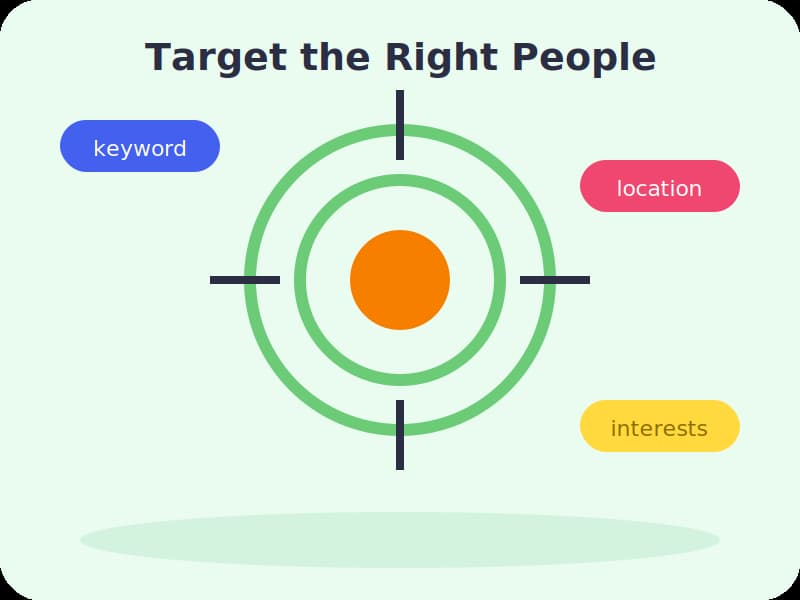
Good targeting is what separates a profitable PPC campaign from one that quietly drains a budget. Depending on the platform, you’ll typically combine a few layers of targeting:
- Keywords (search platforms) the exact phrases that trigger your ad. Match types like exact, phrase, and broad control how loosely or tightly a search needs to match your keyword.
- Location showing ads only where you can realistically serve customers, whether that’s a city, a region, or a country.
- Demographics age, gender, and other broad audience traits where relevant to your product.
- Interests and behaviors (social platforms) targeting based on what people engage with, not just what they type.
- Negative keywords / exclusions terms or audiences you deliberately want to exclude, to avoid wasting spend on irrelevant clicks.
The businesses that get the strongest returns from PPC aren’t necessarily the ones spending the most they’re the ones whose keywords, ads, and landing pages line up tightly with what the audience is actually looking for.
Step 4: Set Your Budget and Bid
Budgets in PPC are usually set daily, with the platform allowed some flexibility day-to-day as long as the monthly total stays on track. Many small businesses starting out work with a monthly budget somewhere in the $1,000–$2,000 range, though plenty of campaigns launch successfully with much less what matters most early on is having enough budget to gather meaningful data, not necessarily a large number.
For bidding strategy, most platforms offer both manual and automated options:
- Manual bidding you set the maximum you’re willing to pay per click yourself. Good for tight control while you’re still learning.
- Automated / Smart bidding the platform’s algorithm adjusts bids in real time based on your goal (clicks, conversions, or a target cost). Works best once you have some conversion history for it to learn from.
Costs per click have generally been rising year over year across most platforms, which means all else being equal, you need to spend a bit more over time to get the same results. Watching your cost per conversion, not just cost per click, is what actually tells you whether a campaign is working.
It’s also worth deciding upfront how you’ll define success before the campaign launches, not after. A $3 click that turns into a $150 sale is a bargain even though it looks expensive in isolation, while a $0.50 click that never converts is ultimately more costly. Framing your budget around cost per conversion, rather than cost per click alone, keeps you from making decisions based on the wrong number.
Step 5: Launch and Optimize
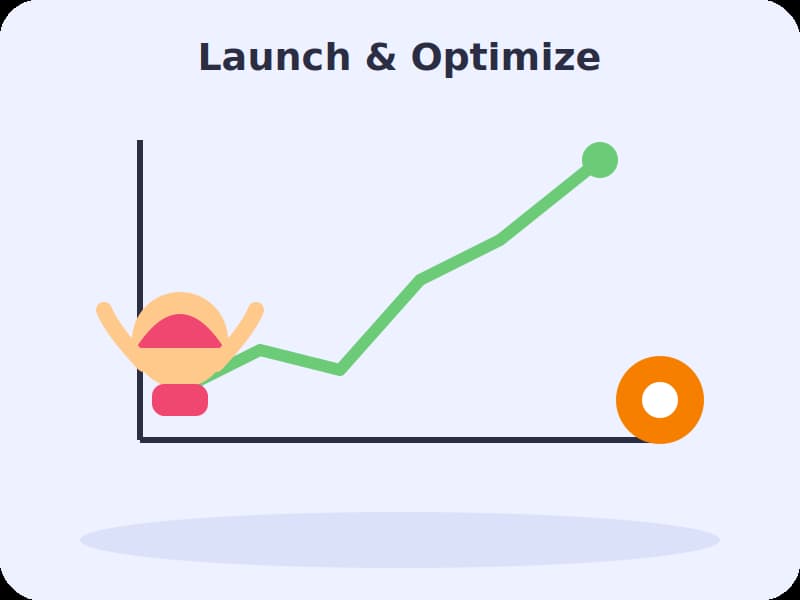
With targeting and budget in place, a few final pieces bring the campaign to life:
- Write ad copy that speaks directly to the keyword or audience vague, generic copy tends to underperform even with perfect targeting.
- Send traffic to a dedicated landing page, not just your homepage. A page built around the specific offer in the ad converts far better than a general page.
- Set up conversion tracking before launch, so every click can eventually be tied to a real result.
- Launch, then let it run. Most platforms need a short learning period often one to two weeks before performance data becomes reliable enough to act on.
- Review and adjust regularly, but change one variable at a time bid, keyword, or creative so you can actually tell what moved the needle.
Watch: Full Video Walkthroughs
Common Beginner Mistakes to Avoid
- Judging results too early. A campaign needs time to exit its learning phase give it at least a week or two before drawing conclusions.
- Sending traffic to the homepage. A generic landing experience converts worse than a page built specifically around the ad’s offer.
- Skipping conversion tracking. Without it, you’re optimizing based on clicks alone, which don’t tell you who actually became a customer.
- Targeting too broadly, too soon. Casting a wide net before you understand what converts usually just burns budget faster.
- Only watching cost per click. A cheap click that never converts is more expensive, in the end, than a costlier click that does.
Frequently Asked Questions
Q: How much does PPC advertising cost?
A: It varies by platform and industry, but the cross-industry average cost per click is roughly $2–3. Many small businesses start with a monthly budget in the $500–$2,000 range.
Q: What’s the difference between PPC and SEO?
A: PPC delivers fast, controllable traffic but stops the moment you stop paying. SEO builds traffic organically over time and keeps working without ongoing spend, but it takes much longer to show results.
Q: Which PPC platform is best for beginners?
A: It depends on your product. Google Ads suits businesses capturing active search intent, while Meta Ads work well for visual products that benefit from discovery-based targeting.
Q: How long before I see results from PPC?
A: Ads can start showing almost immediately after approval, but most platforms need one to two weeks of data before performance becomes reliable enough to judge or optimize confidently.
Q: Do I need a large budget to test PPC?
A: No. You can start small to test which keywords, audiences, and ads perform best, then scale up the budget once you’ve confirmed something is actually working.
Conclusion
PPC advertising isn’t complicated once it’s broken into steps: understand the auction model, pick the platform that matches your audience, target carefully, set a budget you’re comfortable testing with, and track results past the initial click. The advertisers who succeed with PPC aren’t the ones who spend the most they’re the ones whose targeting, ad copy, and landing pages stay tightly aligned with what the person searching actually wants. Start small, measure honestly, and let real data not guesswork guide where you scale up.